

Finished reading: How to Avoid a Climate Disaster by Bill Gates 📚
Finished reading: How to Avoid a Climate Disaster by Bill Gates 📚
My home office now feels more like home.


Finished reading: Being Alive by Neil Astley 📚
Just like it used to be @ Masseria le Stanzìe in Puglia.

Lunch with a view.


Finished reading: Don’t Make Me Think by Steve Krug 📚
Published: #4 of the Greener Returns newsletter 📝

Finished reading: Nexus by Yuval Noah Harari 📚

Finished reading: The Future We Choose by Christiana Figueres and Tom Rivett-Carnac 📚
Published: #3 of the Greener Returns newsletter 📝

Finished reading: Selected Poems by Dylan Thomas 📚
A shot from our walk this morning in Santa Caterina, Nardò.

Published: #2 of the Greener Returns newsletter 📝
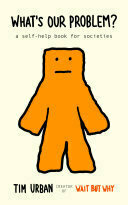
Finished reading: What’s Our Problem?: A Self-Help Book for Societies by Tim Urban 📚
Published: #1 of the Greener Returns newsletter. 📝
This is a new project of mine. Here’s a link where you can learn more and subscribe.
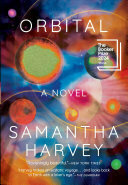
Finished reading: Orbital by Samantha Harvey 📚

Finished reading: Poems by William Blake, selected and introduced by Patti Smith 📚
Great quote from Hunter S. Thompson:
“It is not necessary to accept the choices handed down to you by life as you know it. There is more to it than that — no one HAS to do something he doesn’t want to do for the rest of his life. But then again, if that’s what you wind up doing, by all means convince yourself that you HAD to do it. You’ll have lots of company.”

Finished reading: Principles of Sustainable Finance by Dirk Schoenmaker and Willem Schramade 📚

Finished reading: A Poetry Handbook by Mary Oliver 📚

Finished reading: Stasiland by Anna Funder 📚
Some useful definitions of diction, tone and voice from Mary Oliver’s A Poetry Handbook.
Diction:
“‘Watch your language!’ you may say to someone who has just expressed himself with the help of slang or an expletive. What you really mean is ‘Watch your diction!’ Diction means word choice."
Tone:
“The overall effect of the diction of a piece of writing, in addition to other elements, such as choice of subject, imagery, design of the poem, etc., is called tone.”
Voice:
“The term voice is used to identify the agency or agent who is speaking through the poem, apart from those passages that are actual dialogue. This voice, or speaker of the poem, is often called the persona.”

Finished reading: A Life on Our Planet by Sir David Attenborough 📚

Finished reading: A Path Through the Jungle by Prof Steve Peters 📚
What a fantastic book. Strongly recommend it to anybody looking for some practical, step-by-step advice for taking more control of your mind.
A quote that hit home:
“Every day that we get up, we change. We are a different person from the one who went to bed the night before. By making small changes to your thinking and behaviours, over time, you will move yourself in the direction that you want to go.”
This seems like solid advice too:
“Sometimes, life seems more like a circus than a jungle. If you see life as a circus then stay in your seat and laugh at the clowns; don’t enter the ring and risk becoming one.”
Delighted to have been awarded a distinction in my journalism diploma from the London School of Journalism. 🎓

Finished reading: Invisible Doctrine by George Monbiot and Peter Hutchison 📚

Finished reading: How to Read a Poem by Terry Eagleton 📚
As the dust settles on the US election result, those who care about what it means for the climate may find some strength in these words from James Stockdale.
“You must never confuse faith that you will prevail in the end — which you can never afford to lose — with the discipline to confront the most brutal facts of your current reality, whatever they might be.”
He was a U.S. prisoner tortured and held captive for over seven years during the Vietnam War. It is known as the Stockdale Paradox.
Keep faith in the future but confront reality head on. Mix outrage and optimism.
Sir Jonathan Bate has commented on the shift from humanities to STEM subjects among students seeking well-paying jobs.
“The irony of that, of course, is that if you speak to employers, they really like English students because the best of them can write, communicate and think critically. The deeper irony is, with the AI revolution, the people who are really going to lose their jobs are the computer programmers.”
He has a point. But in my opinion, what we need more of is writers who can code and coders who can write. I think AI can really help people expand their skillset.
As reliance on AI grows, those who develop deep, ‘analogue’ expertise in whatever it is they specialise in will stand head and shoulders above the rest.
I think how AI is used in education is particularly important. Especially if the machines break or get turned off one day.